



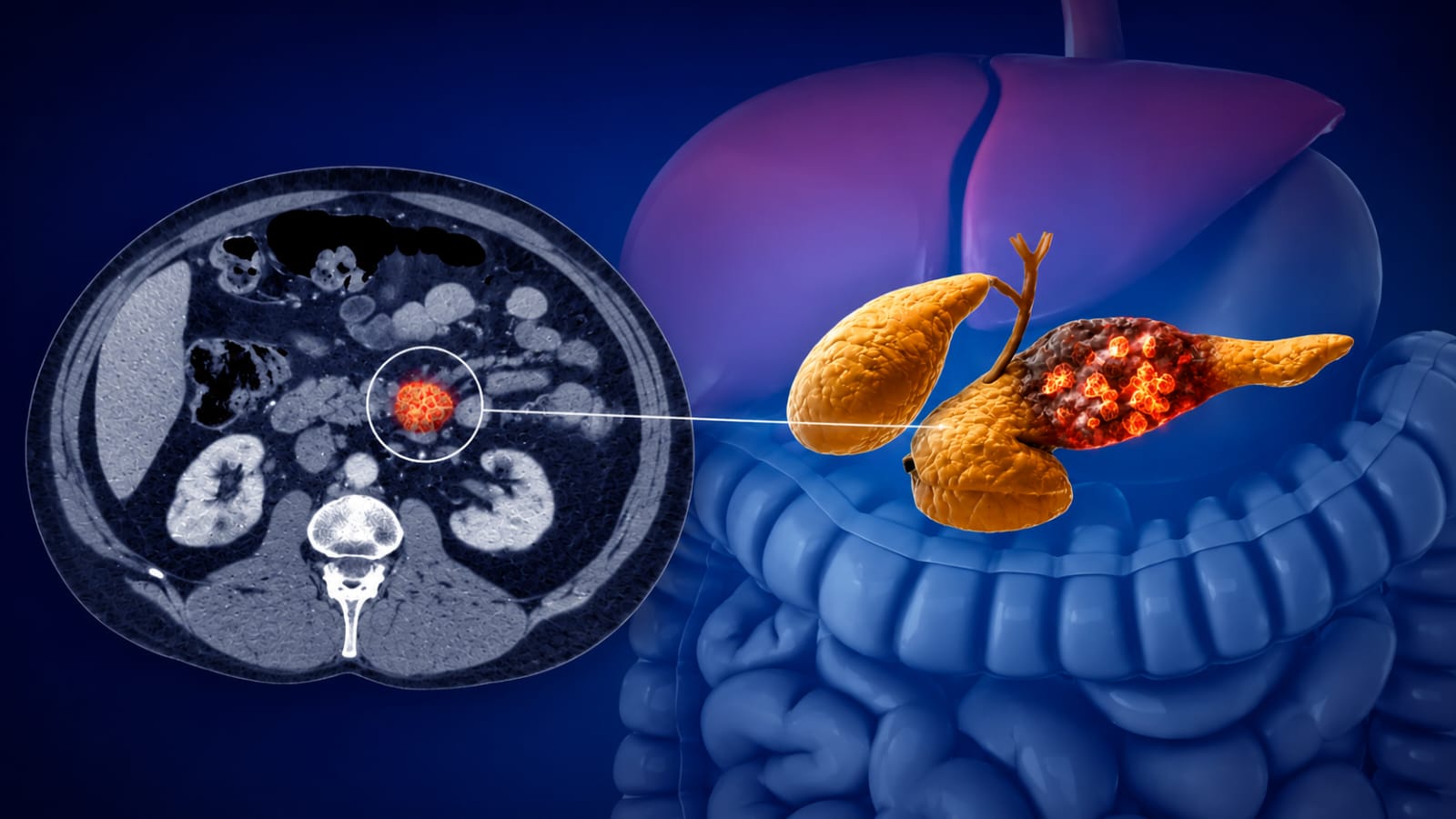
A New AI May Have Detected Pancreatic Cancer Up to 3 Years Before Diagnosis.
An AI system developed by Mayo Clinic researchers may have identified early warning signs of pancreatic cancer before tumors became visible on traditional scans.
A new artificial intelligence system developed by researchers at Mayo Clinic could change how pancreatic cancer is detected in its earliest stages. According to a new study published in the journal Gut, the AI model may have identified hidden signs of the disease up to three years before a traditional clinical diagnosis.
Researchers analyzed nearly 2,000 abdominal CT scans from patients who were later diagnosed with pancreatic cancer. Many of those scans had originally been interpreted as normal by specialists.
The AI system, known as REDMOD, reportedly detected subtle tissue changes in the pancreas that may represent some of the earliest biological signs of tumor development. According to the study, the model identified roughly 73% of pre-diagnostic pancreatic cancers an average of 16 months earlier than conventional diagnostic methods.
How the AI System Works
The model was designed to analyze hundreds of microscopic imaging features invisible to the human eye. By examining texture, structure, and subtle tissue variations in CT scans, the system searches for patterns potentially linked to early-stage cancer development.
Researchers say the results became even more significant in scans performed years before diagnosis. In CT scans taken more than two years before patients officially received a diagnosis, the AI system reportedly identified nearly three times more early cancers compared to standard reviews performed without AI assistance.
To evaluate reliability, the team tested the model using scans from multiple hospitals, imaging systems, and clinical settings. According to the researchers, the AI maintained stable performance across different datasets and environments.
Why Pancreatic Cancer Is So Difficult to Detect
Pancreatic cancer remains one of the deadliest and hardest-to-detect forms of cancer. Early-stage disease often produces few noticeable symptoms, which means many patients are not diagnosed until the cancer has already spread.
According to the National Cancer Institute, more than 85% of pancreatic cancer patients are diagnosed after the disease has progressed beyond its earliest stages. As a result, survival rates remain significantly lower than for many other major cancers.
Dr. Ajit Goenka, senior author of the study and a radiologist at Mayo Clinic, said one of the biggest challenges in treating pancreatic cancer has always been detecting the disease while it is still potentially curable.
What Could Change Next
Researchers believe the AI system could eventually become especially useful for monitoring patients considered high-risk, including people with newly developed diabetes or a family history of pancreatic cancer.
The project is now moving into a new phase called AI-PACED, which will study how AI-assisted detection could be integrated into real-world clinical care.
Experts emphasize that the system is not intended to replace doctors. Instead, it may serve as an additional tool to help specialists detect warning signs that could otherwise go unnoticed during the earliest stages of disease development.
If future clinical studies confirm the findings, researchers say this technology could open new possibilities for earlier diagnosis and treatment of one of the most aggressive forms of cancer.
What to Know
Experts caution that the system is still being studied and is not yet ready for widespread hospital use. Additional clinical testing will be needed before the technology can become part of routine screening. Still, the early findings are drawing significant attention because they may represent an important step toward earlier cancer detection and faster treatment decisions.